Seasonal Herbal Medicine.
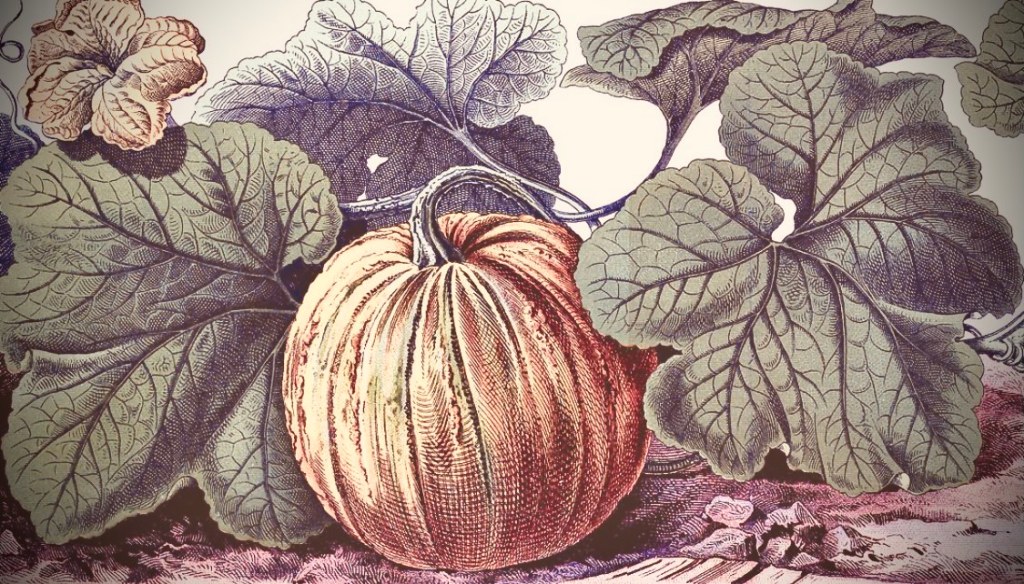
Botanical Name: Cucurbita pepo L. Common Name: Pumpkin Family: Cucurbitaceae (Gourd)
Botanical Profile
Key Phyto Profile & Nutrition: proteins, phytosterols, polyunsaturated fatty acids, all 9 essential amino acids, and vital micronutrients. Linoleic acid (omega-6) and linolenic acid (omega-3), vitamins (carotenoids -carotene, β-carotene, ζ-carotene, neoxanthin, violaxanthin, lutein, zeaxanthin, taraxanthin, luteoxanthin, auroxanthine, neurosporene, flavoxanthin, 5,6,5′,6′-diepoxy-β-carotene, phytofluene, α-cryptoxanthin and β-cryptoxanthin, tocopherols) and microelements (e.g. sodium, magnesium, chromium, potassium, zinc, copper, selenium) 27.
Medicinal Profile
Pumpkin has a well documented history of various medicinal and traditional preparations. As far back as introduction into Europe from native Central America in the 1500’s where it was traditionally prepared by removing the top, taking out the seeds, filled with milk, spices, and honey, and then baked over hot ashes 1.
Medicinal benefits have been varied through countries and worldwide medicine. In Chinese Medicine, seeds are treatment for nausea, motion-sickness, impotency, and swollen prostate accompanied by ‘difficult’ or urinary conditions such as post-micturition dribbling (PMD)2. In Eastern Europe, India and Brazil it traditionally made effective treatment for Tapeworm or intestinal worms as antihelmintic due to its chemical compound Berberine3,4, and in Mexico Bouché from Cucurbita ficifolia effective medicine for reducing blood sugar levels 5.
Seed of C. pepo is approved by the European Medicines Agency in non-prescription drugs for prostate and urinary conditions, and is also listed as Official Medicine by the German Commission E 6.
Clinical studies show that cucurbits’ medicinal properties depend on which chemical compounds are present, that is known to vary through the species, though as general groups they have been found useful for purification of toxic substances, for blood cleansing, and helpful for digestion 7.
Members of the cucurbita family are known to possess phyto-constituents including tocopherols, phenols, terpenoids, carotenoids, saponins, sterols, fatty acids; and functional carbohydrates and polysaccharides are those occurring in higher abundance. But specific to the pumpkin., are shown beneficial actions as antidiabetic 9, antiulcer, analgesic, nephroprotective 8 and against cancer 10. A Palestinian study showed therapeutic value in administering C. pepo seeds to patients with breast cancer 11.
Anticancer properties are particularly thought to be due to mechanisms that inhibit cell proliferation and slow down cell development 12.
Evidence has been found supporting C. pepo as affective antimicrobial and antifungal against gram-positive: staphylococcus aureus, bacillus subtilis, as well as gram-negative bacterium: Escherichia coli, Proteus vulgaris, Pseudomonas aeruginosa, Salmonella spp. or Klebsiella spp. Pumpkin extracts also showed antibacterial activity against water borne bacteria Vibrio cholerae and intestinal flagellated parasite Giardia lamblia 13, 14. It is this property, as effective antimicrobial as well as anti-inflammatory activity, that in particularly the pulp of C. pepo is known for treating stomach conditions 15.
As well as being useful for antimicrobial properties in frequent sites of [urinary] infection, clinical studies have also shown that C. pepo is effective in wound healing when treated with high grade and quality of C. Pepo Oil, with standardised levels of polyunsaturated fatty acids, tocopherols 16. Vitamin C, found in the flesh, helps in collagen formation as well as the absorption of iron. It is B vitamins such as pyridoxine (B6) that promotes functions such as the formation of red blood cells and fibre, being highly energy producing 17.
The non-pectines polysaccharides and pectines found within the pulp, proteins and oil that is obtained from pumpkin seeds, are thought to be the active ingredient for the decrease in blood and urine glucose levels in hyperglycaemia where compared to control group with placebo in clinical studies 18. Effects appear to show C. pepo activity, in not only enhancing glucose tolerance, reducing and helping to control symptoms of diabetes such as frequency of urine and need for insulin 19, but also in slowing down disease progression by protective alpha, beta, gamma, and delta tocopherols as antioxidant activity, that inhibits pancreatic beta cell destruction 20. Research has shown that inclusion of C. pepo regularly in diet or supplement, has reduced risk of cancers of prostate, lung, breast and colorectal and gastric tumour 26.
Most frequently perhaps is the positive effects on Lower Urinary Tract specifically that and symptoms associated with Benign Prostatic Hyperplasia (BPH); characterized by enlarged prostate gland, and frequently results in constriction of lower urinary tract in men. Symptoms associated such as [Stage I BPH] nocturia, frequency of urination, and [Stage II] bladder emptying and residual volume, or urgency are improved by reducing enzyme 5-α-reductase that functions to convert testosterone to dihydrotestosterone with affinity higher for androgen receptors than testosterone and therefore the volume of the prostate can be significantly increased through protein synthesis 21.
This action involving the 5-α-reductase also makes effective treatment for bedwetting in children 22, Overactive Bladder Syndrome (OAB) and stress incontinence that occurs through weakened muscles in ageing women, as C. pepo not only relaxes the bladder muscles, but the inhibition of the enzyme also strengthens the muscle, improving the control of flow 23.
Pumpkin seeds are high in tryptophan whilst gamma-aminobutyric acid (GABA) is contained within the fruit of pumpkin. Together, these promote mood and reduce anxiety whilst are also precursors for improved sleep onset and sleep quality 24, 25.
A study on the effects of pumpkin seed oil on brain health, showed that it significantly reduced the toxic effects on brain tissues and other organs, induced by harmful organic compound aflatoxins as well as reducing symptoms of Depression and emotional states 27.
Phytosterols inhibit the absorption of cholesterol in the small intestine making C. pepo beneficial for heart or cardiac conditions 28. Tocopherols, carotenoids, phytosterols and essential fatty acids are effective for reducing inflammatory conditions and oxidative stress, whilst it has also shown that fatty acid oleic acid present, can contribute in protecting against atherosclerosis and conditions associated with the constriction of blood vessels, such as hypertension 29.
Carotenoid is abundant in C. pepo in the form of lutein, alpha-carotene and beta-carotene, and beta-cryptoxanthin. Essential to maintaining health for bones, mucous membranes and skin; as well as antioxidant through these structures, beta-carotene is precursor to Vitamin A and functions also in strengthening and protecting eye health and vision. Again, this is particularly useful for diabetic and associated conditions 30.
Documented constituents of pumpkin-seed oil, those such as carotenes, gamma and P-tocopherols, phytosterols, fatty acids, and the indications as antioxidants and supplement shown to be effective for bone health, suggest that there may be value as classical anti-inflammatory agent for conditions such as arthritis, or as analgesia for complex pain management 31.
C. pepo contains phytoestrogens, mainly SDG that contributes as anticancer activity, as antioxidant and against high cholesterol through activity binding with alpha– and beta-oestrogen, inhibiting or reducing effects of oestrogen in tissue 32.
The caveat? ..is that pumpkins might look scary, but they’re actually a powerhouse of accessible natural medicinal benefits.
References
- Schuster, J. (2022) C. maxima; C. moschata; C. mixta. Pumpkin. Cucurbita pepo. University of Illinois Extension. Hort Answers. Online: https://web.extension.illinois.edu/hortanswers/plantdetail.cfm?PlantID=629&PlantTypeID=9.
- Caili, F., Huan, S., Quanhong, L. (2006) A review on pharmacological activities and utilization technologies of pumpkin. Plant Foods for Human Nutrition. 2006;61(2):70-77.
- Grzybek, M., Kukula-Koch, W., Strachecka, A., Jaworska, A., Phiri, A.M., Paleolog, J., Tomczuk, K. (2016) Evaluation of Anthelmintic Activity and Composition of Pumpkin (Cucurbita pepo L.) Seed Extracts-In Vitro and in Vivo Studies. Int J Mol Sci. 2016 Sep 1;17(9).
- Blumenthal, M., Goldberg, A., Brinckmann, J., (2000) eds. Herbal Medicine: Expanded Commission E Monographs. American Botanical Council. Newton, MA: Integrative Medicine Communications.
- Adnan, M., Gul, S., Batool, S., Fatima, B., Rehman, A., Yaqoob, S., Shabir, H., Yousaf, T., Mussarat, S., Ali., N. et al. (2017) A review on the ethnobotany, phytochemistry, pharmacology andnutritional composition of Cucurbita pepoL. J. Phytopharm.
- Blumenthal, M., Goldberg, A., Brinckmann, J., (2000) eds. Herbal Medicine: Expanded Commission E Monographs. American Botanical Council. Newton, MA: Integrative Medicine Communications
- Salehi, B., Valussi, M., Jugran, A.K., Martorell, M., Ramírez-Alarcón, K., Stojanović-Radić, Z.Z., Antolak, H., Kręgiel, D., Mileski, K.S., Sharifi-Rad, M. et al. (2018) Nepeta species: From farm to food applications and phytotherapy. Trends Food Sci. Technol. 2018, 80, 104–122.
- Singhai, A.K. (2010) Effect of Momordica dioica Roxb on gentamicin model of acute renal failure. Nat. Prod. Res. 2010, 24, 1379–1389.
- Vassiliou, A., Neumann, G., Condron, R., et al. (1998) Purification and mass spectrometry-assisted sequencing of basic antifungal proteins from seeds of pumpkin (Cucurbita maxima). Plant Science.
- Vijayakumar, M., Eswaran, M.B., Ojha, S.K., Rao, C.V., Rawat, A.K.S. (2011) Antiulcer activity of hydroalcohol extract of Momordica dioica roxb. Fruit. Indian J. Pharm. Sci.
- Jaradat, N.A.,Shawahna, R., Eid, A.M., Al-Ramahi, R., Asma, M.K., Zaid, A.N. (2016) Herbal remedies use by breast cancer patients in the West Bank of Palestine. J. Ethnopharmacol.
- Shokrzadeh, M., Azadbakht, M., Ahangar, N., Hashemi, A., Saravi, S. (2010) Cytotoxicity of hydro-alcoholic extracts of Cucurbita pepo and Solanum nigrum on HepG2 and CT26 cancer cell lines. Pharmacogn. Mag.
- Cheong, N.E., Choi, Y.O., Kim, W.Y., Bae, I.S., Cho, M.J., Hwang, I., Lee, S.Y. (1997) Purification and characterization of an antifungal PR-5 protein from pumpkin leaves. Mol. Cells.
- Cassell, C. (1993) Policy challenges and clinical practices. Hosp. Pract. 1993, 28, 9–10.
- Karanja, J., Mugendi, J., Muchugi, A., Karanja, J.K., Mugendi, B.J., Khamis, F.M., Muchugi, A.N. (2016) Nutritional evaluation of some kenyan pumpkins (Cucurbita spp.). Int. J. Agric.
- National Institutes of Health Office of Dietary Supplements. Vitamin B6 Fact Sheet for Health Professionals. Online: https://ods.od.nih.gov/factsheets/VitaminB6-HealthProfessional/ 05TH October 2022.
- Mohammad, N., Mahmood, M. (2007). Impact of Daily Consumption of Iron Fortified Ready-to-Eat Cereal and Pumpkin Seed Kernels (Cucurbita pepo L.) on Serum Iron in Adult Women. BioFactors (Oxford, England.
- Shi, Y., Xiong, X., Cao, J., Kang, M. (2003) Effect of pumpkin polysaccharide granules on glycaemic control in type 2 diabetes. Cent. South Pharm.
- Gamonski, W. (2012) The true potency of the pumpkin seed. Life Extension Europe.
- Al-Waili, N., Al-Waili, H., Al-Waili, T., & Salom, S. (2017) Natural antioxidants in the treatment and prevention of diabetic nephropathy; a potential approach that warrants clinical trials, Redox Report.
- Ramak, P., Mahboubi, M. (2018) The beneficial effects of pumpkin (Cucurbita pepo L.) seed oil for health condition of men. Food Rev. Int. 2018, 1–11 Assessment Report on Cucurbita pepo L. Semen; European Medicines Agency: Amsterdam, The Netherlands, 2013.
- Blumenthal, M., Goldberg, A., Brinckmann, J,. eds. (2000) Herbal Medicine: Expanded Commission E Monographs. American Botanical Council. Newton, MA: Integrative Medicine Communications.
- Nishimura, M., Ohkawara, T., Sato, H., Takeda, H., Nishihira, J. (2014) Pumpkin Seed Oil Extracted from Cucurbita maxima Improves Urinary Disorder in Human Overactive Bladder. J Tradit Complement Med. 2014 Jan.
- Eagles, J. (1990) Depression treatment and pumpkin seeds. Letter to the Editor. British Journal of Psychiatry. 1990;157(6),937-938.
- Košťálová, Z., Hromadkova, Z. and Ebringerova, A. (2009) Chemical evaluation of seeded fruit biomass of oil pumpkin (Cucurbita pepo L. var. Styriaca). ChemicalPapers.
- Areebambud, C., Sareedenchai, V., Jariyapongskul, A., & Tadtong, S. (2023). Pumpkin seed oil protects SH-SY5Y cells against amyloid-beta 42-induced oxidative stress and neuronal cell death. Science, Engineering and Health Studies, 17, 23050019.
- Paterson, R.R.M., Lima, N. (2010) Toxicology of Mycotoxins. In Molecular, Clinical and Environmental Toxicology; Springer: Berlin, Germany.
- Košťálová, Z., Hromadkova, Z. and Ebringerova, A. (2009) Chemical evaluation of seeded fruit biomass of oil pumpkin (Cucurbita pepo L. var. Styriaca). Chemical Papers.
- Yadav, M., Jain, S., Tomar, R., et al. (2010) Medicinal and biological potential of pumpkin: An updated review. Nutrition Research Reviews.
- Murray, M. (2005) The Encyclopedia of Healing Foods. New York, NY: Atria Books;
- Lestari B., Meiyanto E. (2018) A Review: The Emerging Nutraceutical Potential of Pumpkin Seeds. Indones. J. Cancer Chemoprevention. 2018.
- Patel, D., Vaghasiya, Pancholi, S., et al. (2012) Therapeutic potential of secoisolariciresinol diglucoside: a plant lignin. International Journal of Pharmaceutical Sciences and Drug Research. 2012;4(1):15-18.
- Botanical Nomenclature: The Plant List (2013). Version 1.1. Published on the Internet; http://www.theplantlist.org/ (August 2022) and POWO (2026). “Plants of the World Online. Facilitated by the Royal Botanic Gardens, Kew. Published on the Internet; https://powo.science.kew.org/.
Originally published: 31/10/2022
This article was recently reviewed by author for accuracy and updated on 9th October, 2026 to include the latest information and taxonomy.
Whilst every care is taken to ensure accurate, reputable and the most recent sources and research for this information, this content is not intended as substitute for advice or treatment from a professional clinician. As with conventional medicines, herbal and natural medicines have active ingredients and can have potent effects and interactions with the body, medications, and with other conditions. Especially for those who are taking prescription or over-the-counter medications, it is advised to consult a professional herbalist or medical doctor before beginning any herbal, supplement or lifestyle program. Care and responsible administration is always strongly advocated.

