Seasonal Herbal Medicine .IV.
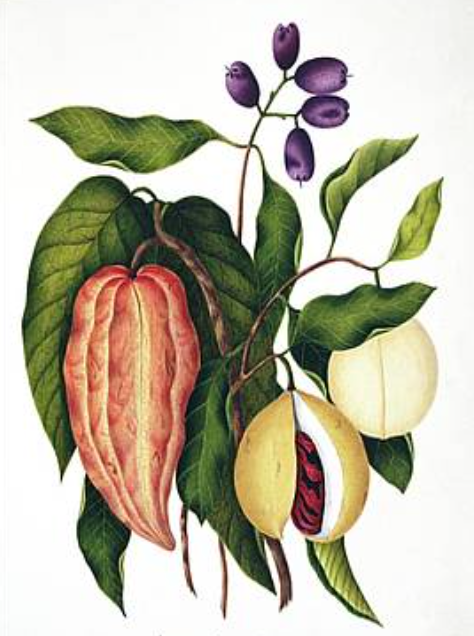
Botanical Name: Syzygium aromaticum (L.) Merr. & L. M. Perry. Synonyms: Clove Family: Myrtaceae
Botanical Profile A small-medium sized evergreen tree, 8-30m tall. Branches are numerous with glabrous leaves, with lower surface containing numerous oil glands. Small, clustered flowers.
Fruit contains one olive-shaped seed, known as ‘mother of clove’. Leaves, flowers and bark are generally aromatic, whilst the dried unopened flower buds are the cloves 0, 1.
Medicinal Profile
Medicinal actions: Antibacterial, analgesic, anti-diabetic, antioxidant, Antifungal, Anti-inflammatory, Anticancer, Anaesthetic, Herbicidal, and Insecticidal activities 3, 4, 5.
Key Phyto Profile: 16 volatile compounds with eugenol (71.5%) and eugenol acetate (8.99%) as the major constituents. The terpenoids, limonin, and ferulic aldehyde, along with eugenol, are also reported from the dichloromethane extract of buds of S. aromaticum 2.
Nutrition: Magnesium, manganese, potassium, iron, and selenium, beta carotene, Vitamin B1, Vitamin B6, Vitamin C, Vitamin K, riboflavin, and Vitamin A. 6.
Toxicity: Therapeutic application for clove has been approved for safety at a daily uptake in humans at 2.5 mg/kg body weight, by World Health Organisation, following possible considerations for toxicity at some doses. This may be hinted at by the noted action as a herbicidal and insecticidal agent., showing that there must be some level of irritant within the material. However, within these doses the reports have shown to be considered and proven safe 7.
S. aromaticum can currently be in three different forms, as whole dried buds (frequently referred to as the “cloves”), ground spice, and essential oil. Although all these forms share similar ‘biomedically- relevant properties’, they differ in the degree of potency, with the oil showing the highest potency and, thus, often being diluted with almond oil. Whole cloves, [containing a good amount of oil], still also have a relative to medium potency, whilst ground cloves are the least potent form as much of the essential oil has been lost., when it is within this state 7. As we can already start to see., much of this medicinal story with Clove, is thought to be attributed to the oils contained in its various forms.
Different parts of S. aromaticum have been used in the traditional system of medicine in treating many kinds of conditions whilst there are various health-promoting and other pharmacological activities that are reported throughout either the extracts, oils, or compounds that are contained 3.
Actually, there are many other factors for S. aromaticum that influence it’s chemical composition and it’ s potency, including the variety, its age, as well as areas of it’s cultivation, post-harvesting processes, distillation methods, and storage conditions 8. These will each influence the quality of that all-important volatile oil, and therefore its [medicinal] behaviour.
The qualities of the volatile (essential) oils and some other constituents found in the cloves (S. aromaticum), are perhaps most frequently associated as Analgesic, potentially mediated by the opioidergic and cholinergic systems 9, as well as their anti-inflammatory effect.
S. aromaticum is also well documented as effective antiseptic and anti-inflammatory actions in particularly for gastrointestinal disorders and dentistry 10,11,12. Specifically here, it is the suppression of pro-inflammatory cytokine production 13, 14, as well as being effective for particularly human gingival fibroblasts (HGF) (but not against skin keratinocytes or periodontal ligament fibroblasts), it does however have the ability to penetrate the dental pulp tissue, and entering the bloodstream 15.
S. aromaticum uses have been generally vast ranging from documented anti-cancer 2, 4, for wounds and treatment of burns 16, and as an antioxidant 17. It has a strong nutritional profile that may make cloves useful in maintaining blood pressure with key electrolyte potassium 18. Various key vitamins, promote both the immune functions, as well as being strengthening for the skin membranes due to constituents manganese and Vitamin C., that are both powerful, effective antioxidants 19, 20, 21.
For respiratory complaints, clove has been used in various applications for chronic coughs and cold, flu, bronchitis, Asthma and shortness of breath 1. and still in many parts of Asian medicine, is even chewed as relief for inflammation of the throat and larynx 6.
Presence of flavonoids; rhamnetin, β-caryophyllene, kaempferol in clove act as anti-inflammatory as they are thought to regulate the cellular inflammatory cascades and the release of pro-inflammatory interleukins 22, whilst a study also found some protective actions on renal inflammation in a study of patients with COVID-19 23.
Many of us may recall hearing from our grand-ancestors about chewing cloves for an upset stomach or to ease digestion. Research has associated benefits of Eugenol and clove extracts such as in the relief of abdominal pain, diarrhoea, indigestion, and nausea 24, however, the data as yet is still considered not convincing enough, for it to become an approved use for Clove by the FDA and regulators.
What we do know from clinical study, is that the flavonoids are likely biologically active compounds that contribute to a demonstration of potent gastro-protective activities seen from ongoing clinical research 25, with various pathways of action in reducing anti-oxidative damage that is associated with fatty liver, and hyperlipidemia 26. It is also being demonstrated that Cloves have some effective action against some bacterial, fungal, and viral strains 27, 28. So this may also, (typically at least) be assumed to improve the overall digestive environment, and gut health.
On the subject of anti-viral S. aromaticum‘s properties through clinical studies, many of Cloves’ actions have specific qualities that are useful for treatments of viruses, such as being antibacterial, anti-thrombolytic 29, or immunostimulant. However, aside from this, research has also shown that one of the major targets of eugeniin [cloves’ major ingredient] is the viral DNA synthesis by the inhibition of the viral DNA polymerase 30. It was demonstrated that (DENV) virus (that causes infections in tropical regions of which there are still no specific antiviral treatments) 31, as well as Herpes Simplex Virus (HSV) was inhibited by Clove ethanol extract, as well as a significantly reduced virus yield of the duration 30. Pure eugenol showed significant antiviral activity against the Ebola Virus in vitro 32, and influenza A virus (IAV), through inhibiting the virus replication 33.
Clove essential oil and eugenol are documented to possess useful analgesic, anaesthetic, and antiseptic effects, as well as their anti-inflammatory properties. It has also been well documented that effects of Clove can increase blood circulation and raising body temperature.., which makes a lovely warming quality to adding this phyto-ingredient to our tonifying., nutrient rich, and strengthening medicines.
References
0. POWO (2022). Syzygium aromaticum (L.) Merr. & L.M.Perry. Plants of the World Online. Facilitated by the Royal Botanic Gardens, Kew. Published on the Internet; http://www.plantsoftheworldonline.org/ [Retrieved 9 December 2022].
1. Mittal, M., Gupta, N., Parashar, P., Mehra, V., Khatri, M. (2014) Phytochemical evaluation and pharmacological activity of Syzygium aromaticum: A comprehensive review. Int. J. Pharm. Pharm. Sci. 2014;6:67–72.
2. Banerjee, S., Panda, C.K., Das, S. (2006) Clove (Syzygium aromaticum L.), a potential chemopreventive agent for lung cancer. Carcinogenesis. 2006;27:1645–1654.
3. Das, N., Dey, A., Mandal, S. K., Chatterjee, D., Logesh, R., Devkota, H.P. (2022) Secondary metabolites of clove (Syzygium aromaticum. Eds): Mohamed Fawzy Ramadan, Academic Press, 2022,Pages 175-193, ISBN 9780323851770.
4. Zheng, G.-Q., Kenney, P.M., Lam, L.K. (1992) Sesquiterpenes from clove (Eugenia caryophyllata) as potential anticarcinogenic agents. J. Nat. Prod. 1992;55:999–1003.
5. Cortés-Rojas, D.F., de Souza, C.R., Oliveira, W.P. (2014) Clove (Syzygium aromaticum): A precious spice. Asian Pac. J. Trop. Med. 2014;4:90–96.
6. Bhowmik, D., Kumar, K.S., Yadav, A., Srivastava, S., Paswan, S., Dutta, A.S. (2012) Recent trends in Indian traditional herbs Syzygium aromaticum and its health benefits. J. Pharm. Phytochem. 2012;1:13–22.
7. Ogunwande, I., Olawore, N., Ekundayo, O., Walker, T., Schmidt, J., Setzer, W. (2005) Studies on the essential oils composition, antibacterial and cytotoxicity of Eugenia uniflora L. Int. J. Aromather. 2005;15:147–152.
8. Charoonratana, T. (2022) Clove (Syzygium aromaticum) volatiles. Eds: Mohamed Fawzy Ramadan, Clove (Syzygium aromaticum), Academic Press, 2022. Pages 117-174.
9. Khalilzadeh, E., Hazrati, R., Saiah, G. (2016) Effects of topical and systemic administration of Eugenia caryophyllata buds essential oil on corneal anesthesia and analgesia. Res. Pharm. Sci. 2016;11:293–302.
10. Darshan, S., Doreswamy, R. (2004) Patented anti-inflammatory plant drug development from traditional medicine. Phytother. Res. 2004;18:343–357.
11. El-Shouny, W.A., Ali, S.S., Hegazy, H.M., Abd Elnabi, M.K., Ali, A., Sun, J. (2020) Traditional herbal medicine against cagA and vacA toxin genes-producing drug resistant Helicobacter pylori. J Tradit Complement Med. 10:366–377.
12. Chaieb, K., Hajlaoui, H., Zmantar, T., Kahla-Nakbi, A.B., Rouabhia, M., Mahdouani, K., Bakhrouf A. (2007) The chemical composition and biological activity of clove essential oil, Eugenia caryophyllata (Syzygium aromaticum L. Myrtaceae): A short review. Phytother. Res. 2007;21:501–506.
13. Bachiega, T.F., de Sousa, J.P., Bastos, J.K., Sforcin, J.M. (2012) Clove and eugenol in noncytotoxic concentrations exert immunomodulatory/anti-inflammatory action on cytokine production by murine macrophages. J. Pharm. Pharmacol. 2012;64:610–616.
14. Rodrigues, T.G., Fernandes, A., Jr., Sousa, J.P., Bastos, J.K., Sforcin, J.M. (2009) In vitro and in vivo effects of clove on pro-inflammatory cytokines production by macrophages. Nat. Prod. Res. 2009;23:319–326.
15. Martínez-Herrera, A., Pozos-Guillén, A., Ruiz-Rodríguez, S., Garrocho-Rangel, A., Vértiz-Hernández, A., Escobar-García, D.M. (2016) Effect of 4-Allyl-1-hydroxy-2-methoxybenzene (eugenol) on inflammatory and apoptosis processes in dental pulp fibroblasts. Mediators Inflamm. 2016;2016:9371403.
16. Prashar, A., Locke, I.C., Evans, C.S. (2006) Cytotoxicity of clove (Syzygium aromaticum) oil and its major components to human skin cells. Cell Prolif. 2006;39:241–248.
17. Ogata, M., Hoshi, M., Urano, S., Endo, T. (2000) Antioxidant activity of eugenol and related monomeric and dimeric compounds. Chem. Pharm. Bull. 2000;48:1467–1469.
18. Udensi, U.K., Tchounwou, P.B. (2017)Potassium homeostasis, oxidative stress, and human disease. Int. J. Clin. Exp. Physiol. 2017;4:111.
19) Wilson, J.X. (2009) Mechanism of action of vitamin C in sepsis: Ascorbate modulates redox signaling in endothelium. Biofactors. 2009;35:5–13.
20) Cao, Y., Qin, Y., Bruist, M., Gao, S., Wang, B., Wang, H., Guo, X. (2015) Formation and dissociation of the interstrand i-motif by the sequences d(XnC4Ym) monitored with electrospray ionization mass spectrometry. J. Am. Soc. Mass Spectrom. 2015;26:994–1003.
21. Horsburgh, M. J., Wharton, S.J., Karavolos, M., Foster, S. J. (2002) Manganese: Elemental defence for a life with oxygen. Trends Microbiol. 2002;10:496–501.
22. Rhom, H.S., Ghimeray, A.K., Yoo, D.S., Ahn, S.M., Kwon, S.S., Lee, K.H., Cho, D.H., Cho, J.Y. (2011) Kaempferol and kaempferol rhamnosides with depigmenting and anti-inflammatory properties. Molecules. 2011;16:3338–3344.
23. Su, H., Yang, M., Wan, C., Yi, L.-X., Tang, F., Zhu, H.-Y., Yi, F., Yang, H.-C., Fogo, A.B., Nie, X. (2020) Renal histopathological analysis of 26 postmortem findings of patients with COVID-19 in China. Kidney Int. 2020;98:219–227.
24. Hochenegg, B. (2010) Evaluation of the traditional and well-established use of Tormentillae rhizoma, Caryophylli flos and Caryophylli aetheroleum. Thesis Univ. Wien Germany Uniwien. 2010.
25. Okasha, X., Magaji, R., Abubakar, M.S., Fatihu, M.Y. (2008) Effects of ethyl acetate portion of Syzygium aromaticum flower bud extract on Indomethacin-induced gastric ulceration and gastric secretion. Eur. J. Sci. Res. 2008;20:905–913.
26. Al-Okbi, S.Y., Mohamed, D.A., Hamed, T.E., Edris, A.E. (2014) Protective effect of clove oil and eugenol microemulsions on fatty liver and dyslipidemia as components of metabolic syndrome. J. Med. Food. 2014;17:764–771.
27. Ueda-Nakamura, T., Mendonça-Filho, R.R., Morgado-Díaz, J.A., Korehisa Maza, P., Prado Dias Filho, B., et al. (2006) Antileishmanial activity of Eugenol-rich essential oil from Ocimum gratissimum. Parasitol. Int. 2006;55:99–105.
28. Velluti, A., Sanchis, V., Ramos, A., Turon, C., Marín, S. (2004) Impact of essential oils on growth rate, zearalenone and deoxynivalenol production by Fusarium graminearum under different temperature and water activity conditions in maize grain. J. Appl. Microbiol. 2004;96:716–724.
29. García-Mediavilla, V., Crespo, I., Collado, P.S., Esteller, A., Sánchez-Campos, S., Tuñón, M.J., González-Gallego, J. (2007) The anti-inflammatory flavones quercetin and kaempferol cause inhibition of inducible nitric oxide synthase, cyclooxygenase-2 and reactive C-protein, and down-regulation of the nuclear factor kappaB pathway in Chang Liver cells. Eur. J. Pharmacol. 2007;557:221–229.
30. Tragoolpua, Y., Jatisatienr, A. (2007) Anti-herpes simplex virus activities of Eugenia caryophyllus(Spreng.) Bullock & SG Harrison and essential oil, eugenol. Phytother. Res. 2007;21:1153–1158.
31. Batool, F., Mansoor, H.J., Shahzad-ul-Hussan, S., Saeed, M. (2019) Inhibition of dengue virus protease by Eugeniin, Isobiflorin, and Biflorin Isolated from the Flower Buds of Syzygium aromaticum (Cloves) ACS Omega. 2019;4:1525–1533.
32. Dai, J.-P., Zhao, X.-F., Zeng, J., Wan, Q.-Y., Yang, J.-C., Li, W.-Z., Chen, X.-X., Wang, G.-F., Li, K.-S (2013) Drug screening for autophagy inhibitors based on the dissociation of Beclin1-Bcl2 complex using BiFC technique and mechanism of eugenol on anti-influenza A virus activity. PLoS ONE. 2013;8:e61026.
33. Anantpadma, M., Freundlich, J.S., Davey, R.A., Madrid, P.B., Ekins, S. (2019) The natural product eugenol is an inhibitor of the ebola virus in vitro. Pharm. Res. 2019;36:1–6.
Botanical Information: The Plant List (2013). Version 1.1. Published on the Internet; http://www.theplantlist.org/ (December 2022) and POWO (2026). “Plants of the World Online. Facilitated by the Royal Botanic Gardens, Kew. Published on the Internet; https://powo.science.kew.org/.
Originally published: 24/12/2022
This article was recently reviewed by author for accuracy and updated on 5th October 2026, to include the latest information and taxonomy.
Whilst every care is taken to ensure accurate, reputable and the most recent sources and research for this information, this content is not intended as substitute for advice or treatment from a professional clinician. As with conventional medicines, herbal and natural medicines have active ingredients and can have potent effects and interactions with the body, medications, and with other conditions. Especially for those who are taking prescription or over-the-counter medications, it is advised to consult a professional herbalist or medical doctor before beginning any herbal, supplement or lifestyle program. Care and responsible administration is always strongly advocated.
Apothēcary of Botanical Medicine
South Westminster Centre For Health, 82 Vincent Square, London SW1P 2PF
07873 268646

