Seasonal Herbal Medicine .V.
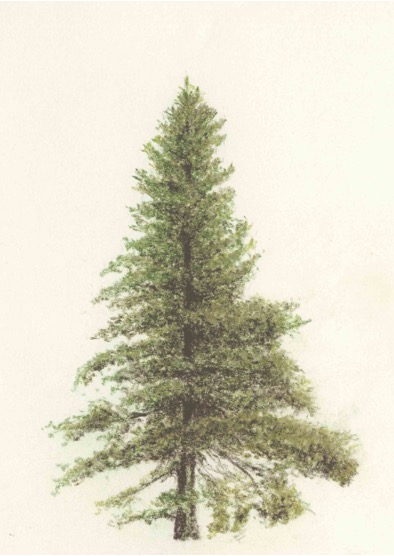
Botanical Name: Picea glauca (Moench) Voss. Synonyms: Spruce Genus: Picea
Botanical Profile Upward, cone shaped, slightly drooping with pinkish brown, glabrous branches, orange-brown, rounded buds 3-6 mm, and apex sharp-pointed needles as rigid, blue-green, bearing stomates on all surfaces at 4-angled cross sections 0.
Fruit: Seed cones green or violet ripening pale buff, cylindric, soft, “2.5-6(8) cm; scales fan-shaped 1. White spruce seeds can be collected from 2 to 4 weeks before they ripen and seed quality improved by storing under cool (4° to 10° C (40° to 50° F) conditions 2. Cones and seeds have been produced by 4-year-old trees 3.
Medicinal Action Highlights: Antiseptic, Carminative, Diaphoretic, and Expectorant 5.
Key Phyto Profile: Polyphenolic compounds having significant biological activities., terpenes, alkaloids, lignins and flavonoids, such as quercetin, rutin, resveratrol. Resin, Volatile oil 4.
The species is among the longest living plant species, a very old tree that reflects the resilience of its species to withstand extreme conditions including overcrowding, drought, wind, cold, and heat 6.
Partly, this is due to the defence system of the species’ specialised cell type and tissues, as resin ducts and polyphenolic parenchyma cells produce and accumulate large quantities of oleoresin terpenoids and various phenolic metabolites 7, this creates a chemical strength of tissues that can withstand most pathogen, as well as climate 8, 9.
In fact, it is often the older and thriving trees that are documented, that are in the least favourable environments such as above the Arctic Circle. Some spruces are recorded at more than 1,000 years old, and with an average of around 250yr natural lifespan of thee tree in a more moderate environment10. In the USA the oldest documented is dated 668 years 11.
The gum, bark, sap, and needles have been known through history for a variety of lore and interests such as spiritual protective qualities, as dye for rich colour it possesses, and as talcum powder. More recently, the highly valuable resource, as well as it being a popular choice out of all the family of spruces in the tradition of christmas trees, it is unfortunately mostly exploited for its wood and commercial timber 12.
For the Native Americans, there are over 150 various uses for the species recorded 13.
These have included as anti-rheumatic, as a decoction of twigs used as herbal steam for rheumatism14. A poultice of gum and lard, applied to an affected area for blood poisoning or for dermatological skin infections 15. Infusion of the cones was taken for urinary troubles16, or as a cough medicine, or laxative or in aboriginal medicine to ‘heal the insides’ as an infusion of inner bark and branch tips, or chewing the resin 17.
In recent years the studies have found the composition of Picea glauca have broader properties. High levels of tannins and sesquiterpenes are known to be effective antiseptic, antimicrobial and disinfectant making it a useful aid for immune strengthening and cleansing in infective environments 18.
This may account for frequent uses of the bark, leaf, cone, and resin of the conifer family being supportive for treating treat cold, cough and a diaphoretic for bronchitis as well as a febrifuge, while resin may also used in treating wounds. Monoterpenes similarly, are known as highly antiviral, anti-inflammatory, and anticancer 19. They are powerful antioxidants, particularly from the pycnogenol, polyphenolic compounds primarily tannins, procyanidins, and phenolic acids found in the bark, wood, needle, and cone extract 20.
Inflammation, as well as oxidative stress is a known contributor to Alzheimer’s and neurodegenerative disease, and conifer materials generally have a high documentation for actions that support these, and even thought to offer neuro-protective quality.
Our interest in finding effective drugs and treatments for symptoms and human disease continues, in particularly with new strains and so very available bugs becoming known in the press very recently.
P. glauca., beautifully and gracefully., ascending branches of needles toward an upward crown, in so many of our front rooms this Christmas. And I’m not sure about you.? ..but I think a little enough left, to keep a place in our medicine cabinet too.
References.
0.Farjon, A. (1990) Pinaceae: drawings and descriptions of the genera Abies, Cedrus, Pseudolarix, Keteleeria, Nothotsuga, Tsuga, Cathaya, Pseudotsuga, Larix and Picea. Königstein: Koeltz Scientific Books.
1.Taylor, R. J. (1993). Sections on Picea and Tsuga. Flora of North America Editorial Committee (eds.): Flora of North America North of Mexico, Vol. 2. Oxford University Press. Available at by efloras.org.
2. Edwards, D. G. W. (1977). Tree seed research. In Proceedings, Sixteenth Meeting Canadian Tree Improvement Association, Part 1. Pacific Forest Research Centre.. June 27-30, 1977. p. 209-216. Winnipeg, MB.
3. Sutton, R. F. (1969). Silvics of white spruce (Picea glauca (Moench) Voss). Canadian Forestry Service, Publication 1250. Ottawa, ON. 57.
4. Bhardwaj, K., Silva, A.S., Atanassova, M., Sharma, R., Nepovimova, E., Musilek, K. Et al. (2021) Conifers Phytochemicals: A Valuable Forest with Therapeutic Potential. Molecules. 2021 May 18;26(10):3005.
5. Bhardwaj, K., Silva, A.S., Atanassova, M., Sharma, R., Nepovimova, E., Musilek, K. Et al. (2021) Conifers Phytochemicals: A Valuable Forest with Therapeutic Potential. Molecules. 2021 May 18;26(10):3005.
6. Brown, P.M. (2014) Rocky Mountain Tree-Ring. Research. http://www.rmtrr.org/index.html.
7. Franceschi, V.R., Krokene, P., Christiansen, E. and Krekling, T. (2005) Anatomical and chemical defenses of conifer bark against bark beetles and other pests. New Phytol. 167, 353–376.
8. Kolosova, N., Breuil, C. and Bohlmann, J. (2014) Cloning and characterization of chitinases from interior spruce and lodgepole pine. Phytochemistry, 101, 32–39.
9. Kopaczyk, J.M.; Warguła, J.; Jelonek, T. (2020) The variability of terpenes in conifers under developmental and environmental stimuli. Environ. Exp. Bot. 2020, 180, 104197.
10. Northern Woodland (2007) White Spruce, Picea glauca. December 2007. Online: https://northernwoodlands.org/articles/article/white_spruce_picea_glauca. [12/12/2022].
11. Luckman, B., van Dorp, R., Youngblut, D., and Masiokas, M. (2003). Cited by: RMTRR (2006) A database of maximum tree ages. Rocky Mountain Tree-Ring Research. Feb. 28, 2006. http://www.rmtrr.org/oldlist.htm
12. Honkala. B.H.(1990) Silvics of North America, Vol. 1, Conifers. Washington DC: U.S.D.A. Forest Service Agriculture Handbook 654.
13. The University of Michigan Native American Ethnobotany Database.(2021) A Database of Foods, Drugs, Dyes and Fibers of Native American Peoples, Derived from Plants. Online: http://naeb.brit.org/uses/search/?string=Picea+glauca. 11/12/2022.
14. Densmore, F, (1928) Uses of Plants by the Chippewa Indians, SI-BAE Annual Report #44:273-379, page 362.
15. Leighton, A. L., (1985) Wild Plant Use by the Woods Cree (Nihithawak) of East-Central Saskatchewan, Ottawa. National Museums of Canada. Mercury Series, page 48.
16. Rousseau, J. (1947) Ethnobotanique Abenakise, Archives de Folklore 11:145-182, page 164
17. Black, M. J, (1980), Algonquin Ethnobotany: An Interpretation of Aboriginal Adaptation in South Western Quebec, Ottawa. National Museums of Canada. Mercury Series Number 65, page 126.
18. Da Silveira E Sá, R.D.C., Andrade, L.N., De Sousa, D.P. (2015) Sesquiterpenes from essential oils and anti-inflammatory activity. Nat. Prod. Commun. 2015, 10, 1767–1774.
19. Porres-Martínez, M., González-Burgos, E., Carretero, M.E., Pilar Gómez-Serranillos, M. (2016) In vitro neuroprotective potential of the monoterpenes α-pinene and 1,8-cineole against H2O2-induced oxidative stress in PC12 cells. Z. fur Naturforsch. Sect. C J. Biosci. 2016, 71, 191–199.
20. Packer, L., Rimbach, G., Virgili, F. (1999) Antioxidant activity and biologic properties of a procyanidin-rich extract from bark, pycnogenol. Free Radic. Biol. Med. 1999, 27, 704–724.
21. Maimoona, A., Naeem, I., Saddiqe, Z. Jameel, K. (2011) A review on biological, nutraceutical and clinical aspects of French maritime pine bark extract. J. Ethnopharmacol. 2011, 133, 261–277.
22. Qayum, M., Nisar, M., Shah, M.R., Adhikari, A., Kaleem, W.A., Khan, I., Khan, N., Gul, F., Khan, I.A., Zia-Ul-Haq, M.; et al. (2012) Analgesic and antiinflammatory activities of taxoids from Taxus wallichiana Zucc. Phyther. Res. 2012, 26, 552–556.
Botanical Information: WFO (2022): Picea glauca (Moench) Voss. Published on the Internet; http://www.worldfloraonline.org/taxon/wfo-0000482539. Accessed on: 20 Dec 2022′ and POWO (2026). “Plants of the World Online. Facilitated by the Royal Botanic Gardens, Kew. Published on the Internet; https://powo.science.kew.org/.
Originally published: 26/12/2022
This article was recently reviewed by author for accuracy and updated on 5th October 2026, to include the latest information and taxonomy.
Whilst every care is taken to ensure accurate, reputable and the most recent sources and research for this information, this content is not intended as substitute for advice or treatment from a professional clinician. As with conventional medicines, herbal and natural medicines have active ingredients and can have potent effects and interactions with the body, medications, and with other conditions. Especially for those who are taking prescription or over-the-counter medications, it is advised to consult a professional herbalist or medical doctor before beginning any herbal, supplement or lifestyle program. Care and responsible administration is always strongly advocated.
Apothēcary of Botanical Medicine
South Westminster Centre For Health, 82 Vincent Square, London SW1P 2PF
07873 268646

